what to do if dog has congestive heart failure
What is congestive center failure? 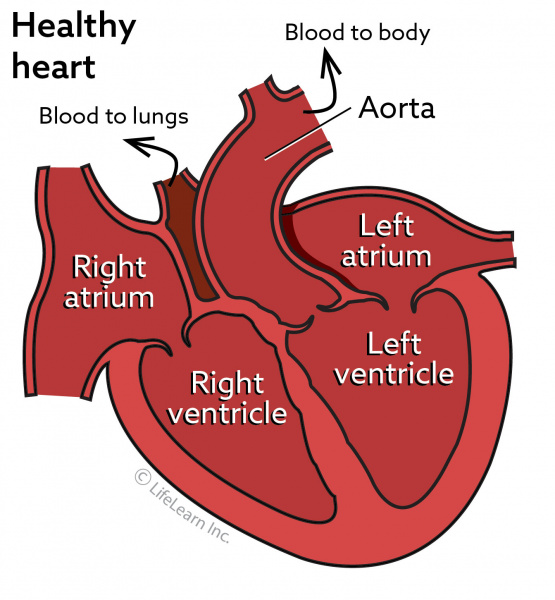
Congestive heart failure (CHF) is a term that refers to the heart'south disability to pump acceptable blood to the torso. There are many causes of CHF in dogs. The two most mutual causes are:
- mitral valve insufficiency (MVI). MVI is a leaky mitral valve, which is the valve betwixt the left atrium and the left ventricle.
- dilated cardiomyopathy (DCM).
For further data on these specific causes, please see the handouts "Dilated Cardiomyopathy in Dogs" and "Mitral Valve Disease in Dogs".
Clinical signs of CHF vary depending on whether the dog has left- or right-sided heart failure.
What is the difference betwixt correct-sided and left-sided CHF?
Right-sided congestive heart failure (RS-CHF) causes poor venous blood return to the eye. In other words, when the centre contracts or pumps, instead of the right ventricle pushing the blood through the lungs for oxygenation, some blood leaks through the tricuspid valve (the valve betwixt the right atrium and right ventricle) dorsum into the right atrium. This blood backs upwards into the systemic apportionment (the main apportionment of the body) and consequently becomes congested. Fluid accumulates in the abdomen, interfering with the office of the organs in these areas. The abdomen may fill with fluid, a condition called ascites. Fluid may besides leak from veins in the limbs, causing swelling, known as peripheral edema.
In left-sided congestive middle failure (LS-CHF), when the heart contracts or pumps, instead of the left ventricle pushing the blood into the systemic circulation, some blood leaks through the mitral valve dorsum into the left atrium and then it backs upwardly into the lungs. Fluid then seeps into the lung tissue resulting in pulmonary edema. This causes coughing and difficulty breathing. Left-sided congestive heart failure (LS-CHF) is the virtually common class of congestive heart failure. The classic signs of eye failure, coughing and fluid in the chest, are most commonly caused by LS-CHF.
Is CHF due mainly to heart valve affliction?
CHF is most commonly caused by valvular insufficiency. It is estimated that lxxx% of the canine CHF cases are caused by MVI. However, there are many other causes. Disease of the heart muscle (cardiomyopathy), irregularities of rhythm, and narrowing of some of the major blood vessels can also cause CHF. Initially, MVI results in left-sided congestive heart failure. If left untreated, the heart failure may progress to involve both sides of the middle.
What clinical signs should I expect?
The most common clinical sign of congestive centre failure (CHF) is persistent coughing accompanied by difficulty animate. This is due mainly to pulmonary edema or the accumulation of fluid in the lungs. The enlarged heart volition also button confronting the trachea, causing irritation that can induce a coughing.
"The most common clinical sign of congestive heart failure is persistent cough accompanied by difficulty breathing."
Many dogs with CHF will tire out more easily, take reduced stamina, and do not engage in playing or walking as they in one case did. Cough when at residuum or sleeping, excessive panting, persistent loss of appetite, a swollen abdomen, and pale or bluish gums are also signs associated with heart failure. The dog will develop generalized weight loss and muscle wasting due to the effects of CHF on other trunk systems. If whatsoever of these signs develop in a pet with a heart murmur, notify your veterinarian immediately.
Do dogs have heart attacks?
In humans a heart assail usually refers to myocardial infarction (MI). Myocardial infarction refers to decease of the cells in an area of the heart muscle or myocardium. Cell expiry is normally due to oxygen impecuniousness acquired by obstacle of the coronary claret vessels that supply blood to the center muscles. Heart attacks are rare in dogs but unexpected and sudden death in dogs diagnosed with any class of heart disease is possible.
How is CHF diagnosed?
Every bit with any heart problem, diagnosis involves several tests:
Auscultation or listening to the center with a stethoscope is the kickoff pace in diagnosing eye disease. Heart murmurs are detected by auscultation; the murmur's location and intensity assistance make up one's mind its significance. The heart rhythm is assessed, and if at that place are concerns, the veterinarian may simultaneously palpate or feel the pulse to determine its force and rhythm. Finally, the lungs are assessed, looking for bear witness of changes associated with center failure.
Chest X-rays are taken to evaluate the size and shape of the heart and look for lung changes such as the presence of fluid.
Blood and urine tests are performed to give an indication of any other disorders in the trunk. Liver and kidney function are ofttimes impaired in patients with middle affliction.
An electrocardiogram (ECG) measures the electric activity of the middle and allows accurate determination of both heart charge per unit and rhythm. Any abnormal rhythms (arrhythmias or dysrhythmias) can be detected and evaluated. 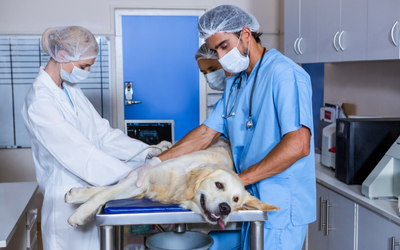
Ultrasound examination (echocardiogram) utilizes ultrasound waves to evaluate the heart. The size and thickness of each heart sleeping accommodation can be evaluated, and the effectiveness of the eye's contractions can be straight observed. Measurements can exist taken to evaluate the center's pumping efficiency.
Can't you care for my domestic dog without these tests?
Accurate diagnosis gives your veterinary a much ameliorate guide to the blazon and extent of treatment necessary. Today in that location is a wide pick of heart medications that can exist used to treat congestive middle failure and the handling government must be tailored for each patient. Without these tests, your veterinary is unable to determine the optimal treatment for your pet, and may inadvertently cause more harm than good. With proper treatment, many dogs are able to live a normal life for many months to years.
Source: https://vcahospitals.com/know-your-pet/congestive-heart-failure-in-dogs
0 Response to "what to do if dog has congestive heart failure"
Post a Comment